

If you watch the global casino industry closely, one trend becomes very clear. Big casino companies are constantly buying smaller casinos instead of building everything from scratch.
At first, it may seem surprising. Large companies already have money, experience, and global recognition. So why do they choose to acquire smaller businesses instead of creating new ones?
The answer lies in strategy, speed, market control, and long term profitability.
Let’s explore this in a deeper and more practical way, combining real examples, industry data, and how these decisions shape the casino world.
The Real Reason: Fast Expansion and Market Domination
One of the biggest reasons behind these acquisitions is speed.
Building a new casino is not a simple project. It involves:
- government approvals and licenses
- construction costs that can reach billions
- hiring and training thousands of employees
- building customer trust from zero
In many regions, getting a license alone can take years.
That is why companies prefer acquisitions.
For example, Caesars Entertainment expanded massively by acquiring smaller operators over time. Similarly, MGM Resorts International has used acquisitions to strengthen its presence in different markets.
Industry Stat
- The global casino market is valued at over $300 billion, and mergers and acquisitions play a major role in this growth.
- In the last decade, billions of dollars have been spent on casino acquisitions worldwide.
Real Example
When a big company buys an existing casino:
- the property is already operational
- customers are already visiting
- revenue is already flowing
This means instant entry into the market, instead of waiting years.
Image: Casino Industry Growth and Expansion
Large casino hubs show how fast expansion through acquisitions helps brands dominate entire regions.
Acquiring Loyal Customers Instead of Finding New Ones
One of the most valuable assets of any casino is not the building. It is the customer base.
Smaller casinos often have:
- loyal local players
- regular visitors
- strong community connections
Buying a casino means buying that trust.
A marketing expert in the gaming industry once said:
“It is easier to retain existing players than to create new ones from zero.”
This is especially important because studies show:
- Around 20 percent of casino players generate nearly 80 percent of total revenue
- High value players tend to stay loyal to places they trust
When a large brand acquires a smaller casino, it gains access to these high value customers instantly.
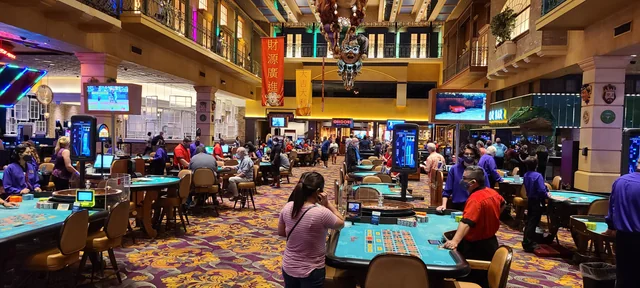
Casinos are built around repeat visitors, making customer loyalty one of the most valuable assets during acquisitions.
Stronger Networks Mean Bigger Profits
Another major reason is network building.
When companies own multiple casinos, they can connect them into a single system.
For example:
- shared loyalty programs
- cross location rewards
- unified marketing campaigns
A player who earns rewards in one city can use them in another.
This creates a powerful ecosystem.
Companies like Las Vegas Sands have built global networks where players move across properties while staying within the same brand.
Example
A customer visits a casino in one city and earns points. Later, they travel to another location owned by the same company and use those points.
This increases:
- customer retention
- lifetime value per player
- brand loyalty
Cost Efficiency and Hidden Financial Benefits
Acquisitions are not just about growth. They are also about efficiency.
Large companies benefit from economies of scale:
- better deals with game providers
- lower operational costs
- centralized management systems
Instead of running one small casino independently, a company can integrate it into a larger system and reduce expenses.
Industry Insight
After acquisitions, companies often:
- upgrade technology
- improve game variety
- increase marketing reach
This can significantly increase revenue from the same property.

Modern casino systems allow companies to connect multiple properties into one unified network.
Eliminating Competition Before It Grows
There is also a strategic reason that is less visible but very important.
Big brands often acquire smaller casinos to reduce competition.
Instead of competing with a growing local casino, they simply buy it.
This helps them:
- control market share
- prevent price competition
- dominate specific regions
A business analyst once explained:
“In many cases, acquisition is not just growth. It is defense.”
This is very common in competitive markets like the United States and Asia.
Real Player and Employee Reactions
Acquisitions do not only affect companies. They also impact players and employees.
Some players see benefits:
“After the takeover, the casino added better games and rewards. It actually improved the experience.”
Others feel uncertain:
“I liked the old vibe. After the big brand took over, it felt more commercial.”
Employees also share mixed feelings:
- some gain better opportunities in larger companies
- others worry about job security during restructuring
These human reactions are an important part of every acquisition story.
Regulatory Advantage: Buying Licenses Instead of Waiting
In many countries, casino licenses are limited and highly regulated.
Getting a new license can be extremely difficult.
By acquiring an existing casino, companies often gain:
- operating licenses
- legal approvals
- established regulatory relationships
This is a huge advantage, especially in markets with strict gambling laws.
The Bigger Picture: A Global Consolidation Trend
The casino industry is slowly moving toward consolidation.
This means fewer companies controlling more properties.
Large brands are becoming even larger by absorbing smaller ones.
Key Trend
- More mergers and acquisitions every year
- Expansion into new regions without starting from zero
- Increasing dominance of global casino giants
Final Thought: Growth With Responsibility
At its core, buying smaller casinos is a strategic move driven by speed, profit, and market power.
But there is also a deeper layer.
Casinos are not just business assets. They are places filled with people:
- players seeking entertainment
- employees building careers
- communities connected to local venues
The smartest companies understand this balance.
They do not just expand. They adapt, improve, and respect what already exists.
Because in the end, success in the casino world is not just about owning more properties.
It is about creating experiences that keep people coming back.